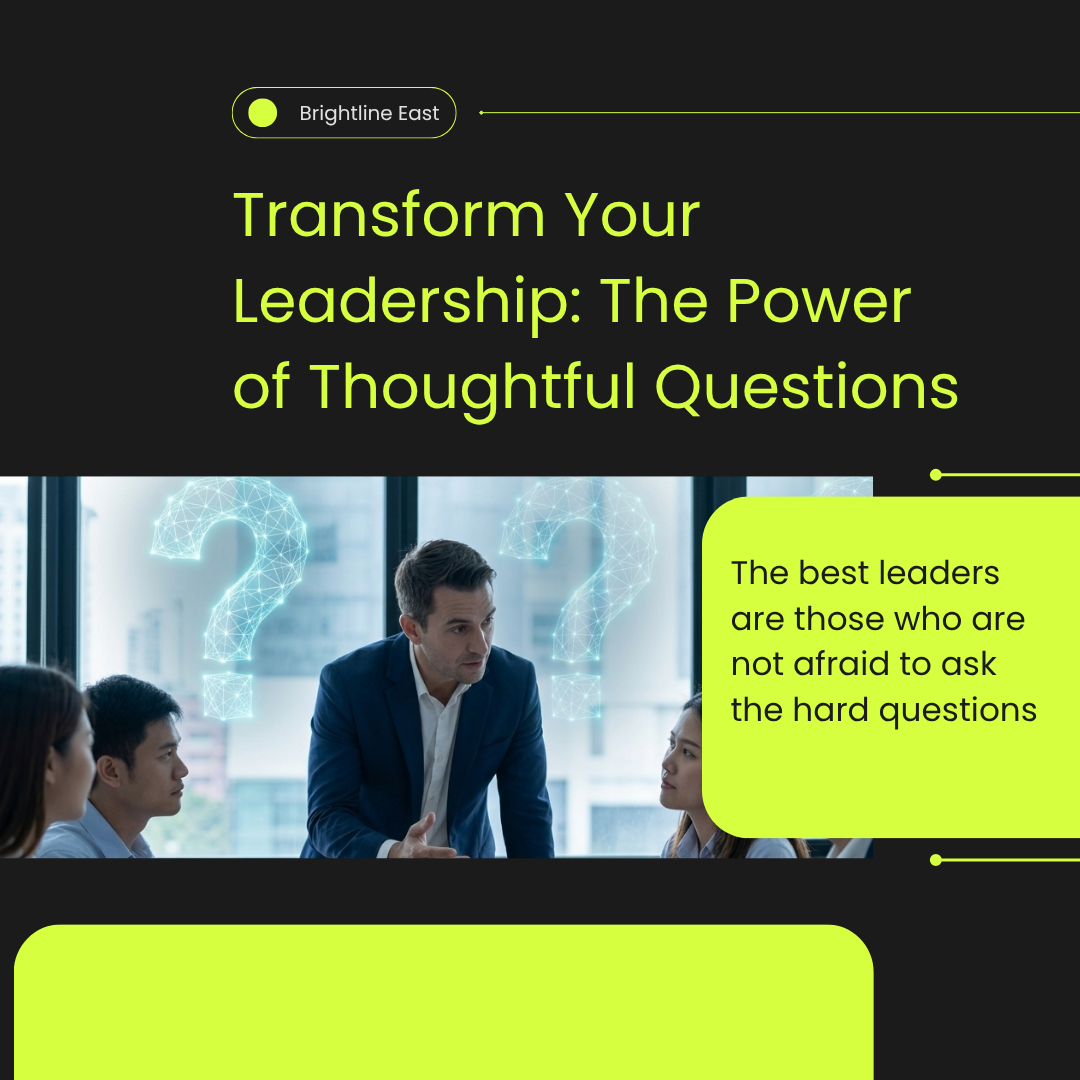
Transform Your Leadership: The Power of Thoughtful Questions
By Brightline East.
In the fast-paced world of modern leadership, the ability to navigate complex challenges is paramount. At Brightline East, we believe that the foundations of effective leadership rest not just on making decisions but on asking the right questions. Thoughtful, incisive questions can transform communication, elevate decision-making, and foster a culture of innovation within teams. In this blog post, we explore how the art of questioning can significantly enhance your leadership efficacy and your team’s overall success.
The Power of Questions in Leadership
Questions are the tools of observation and insight. When leaders adopt a questioning approach, they invite dialogue and openness. Here’s how asking better questions can lead to remarkable outcomes:
Improving Communication
- Fostering Open Dialogue: Engaging team members with thoughtful questions encourages them to express their thoughts and insights without hesitation.
- Encouraging Diverse Perspectives: Quality questions prompt team members to think critically and share unique viewpoints, enriching the conversation.
- Building Trust: When leaders ask questions, they show a willingness to listen. This builds trust and respect within the team.
Enhancing Decision-Making
In decision-making, clarity is essential. Here’s how asking the right questions influences the process:
- Clarifying Objectives: Questions about goals help align the team’s efforts and ensure everyone is on the same page.
- Identifying Obstacles: Thoughtful enquiries about potential hurdles allow teams to anticipate challenges before they arise.
- Encouraging Critical Analysis: Questions can challenge assumptions and prompt deeper analysis of available data, leading to more informed decisions.
Boosting Problem-Solving Skills
Every problem holds the seed of a solution. The right questions can unearth these solutions, fostering a proactive problem-solving culture:
- Encouraging Creative Thinking: Open-ended questions stimulate creativity, prompting team members to brainstorm innovative solutions.
- Facilitating Collaboration: When leaders ask questions that involve the entire team, everyone feels empowered to contribute to solutions.
- Learning from Mistakes: Questions about previous challenges help teams reflect and learn from past experiences, strengthening future performance.
Cultivating Team Development
For teams to develop effectively, they must engage in constructive feedback. Here’s how questioning can drive development:
- Facilitating Personal Growth: Leaders asking questions about individual aspirations and challenges can support personal and professional growth.
- Identifying Development Needs: Inquiring about skills gaps leads to targeted training and development opportunities.
- Encouraging Self-Reflection: Questions foster a culture of self-assessment, allowing team members to evaluate their performance and set improvement goals.
Implementing a Questioning Culture at Brightline East
To cultivate an environment where questions thrive, consider the following strategies:
- Model Curiosity: As leaders, we should exemplify curiosity by regularly asking questions that spur discussion.
- Develop Questioning Skills: Offer training sessions focused on formulating effective questions to enhance communication practices.
- Create Safe Spaces: Establish an atmosphere where team members feel comfortable expressing ideas and asking questions without judgement.
Conclusion
At Brightline East, we believe that the best leaders are those who are not afraid to ask the hard questions. By practising the art of questioning, you can propel your team towards heightened engagement and success. Embrace this tool of communication, and watch your leadership flourish. Remember, it’s not just about what you know, but about the questions you ask that unlocks unlimited potential.
#Leadership #EffectiveCommunication #TeamDevelopment #ProblemSolving #DecisionMaking #Curiosity #BrightlineEastUK #InnovativeLeadership #AskingQuestions #TeamCulture #BrightlineEast